
META Project

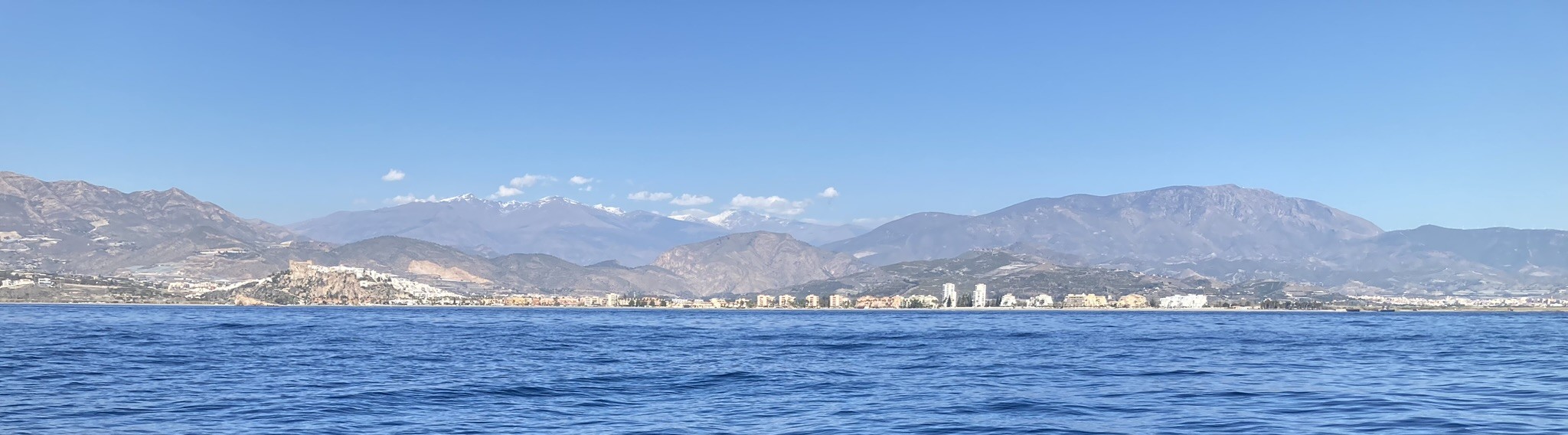
The aim of this project is to determine the freshwater reserves of the coastal aquifers in the province of Granada through the implementation of combined methodologies between land and sea. On this basis, for the first time, a study of submarine discharge in these areas will be carried out, which will make it possible to consider the freshwater reserves in periods of drought. It has been funded by the Andalusian Regional Government, the Regional Ministry of University, Research and Innovation and the Spanish Government and by the European Union – NextGenerationEU through project PCM_00018 and will be active during the period 2024-2026.

Summary
The optimal use of coastal aquifer resources has a significant social and economic impact and affects the development of coastal areas, which have high population density and agricultural exploitation. The coast represents a frontier in knowledge with high scientific interest due to the difference in study techniques on land and at sea, which prevent a detailed determination of this connection zone. The META project will comprehensively analyze coastal aquifers through an innovative methodology. Areas will be selected for a detailed analysis of detrital aquifers with high and low recharge, as well as aquifers whose behavior is conditioned by variations in the depth of the basement. In addition, aquifers in carbonate massifs, where the flow is determined by karstification and fracturing, will be analyzed. These aquifers represent the different types recognized in the Andalusian Mediterranean coast. The proposed methodology will successively determine the structure of the aquifer; the distribution of freshwater and saline water and its temporal evolution; the characterization of submarine freshwater springs; and finally integrate the whole into hydrogeological numerical models to evaluate their reserves, considering aquifers as a land-sea continuum. The methods used will be multidisciplinary, employing geological, geophysical, and hydrogeological techniques in both terrestrial and marine environments. Due to the limited information on freshwater reserves in the coastal strip, new instrumentation will be developed for radon, temperature, and salinity sampling adapted to the needs of this area, which is critical for hydrogeological functioning and coastal ecosystems. The META project represents a contribution to the Blue Economy action line, as it presents frontier applications in the study of marine aquifer water resources that must be analyzed comprehensively.
Participants
- Carlos Duque (IP). Universidad de Granada
- Jesús Galindo Zaldívar (Co-IP). Universidad de Granada
- María Luisa Calvache . Universidad de Granada
- Manuel López Chicano. Universidad de Granada
- José Benavente Herrera. Universidad de Granada
- Antonio Pulido-Bosch. Universidad de Granada
- Francisco Lamas Fernández. Universidad de Granada
- Lourdes González Castillo. Universidad de Granada
- Francisco Martínez Moreno. Universidad Complutense de Madrid
- Asier Madarieta Churruca. Universidad del País Vasco
- María Teresa Pedrosa González. IGME-CSIC
- Denys Grombacher. Aarhus University
- Holly Michael. University of Delaware
- Ángela Blanco Coronas. Universidad de Granada
- Cecilia Morales. Universidad de Granada
- Víctor Mora Bajén. Universidad de Granada
- Marta García Gámez. Universidad de Granada
- Christian Montoro Paredes. Universidad de Granada
- Rhaissa de Souza. Universidad de Granada
- Víctor Tendero Salmerón, Universidad de Granada
Activities


