
The laboratory is equipped to support experimental research in structural monitoring, vibration analysis, embedded sensing systems, data acquisition, and data-driven methods for structural health monitoring. Its facilities combine controlled structural testbeds, electronics prototyping resources, data acquisition systems, high-performance computing workstations, and digital technologies for inspection, visualization, and photogrammetry-related applications.
The laboratory includes several scaled structural models used as controlled testbeds for developing, validating, and comparing vibration-based monitoring and damage identification methods.
One of the main experimental platforms is a five-story steel frame model designed for modal identification and vibration-based structural health monitoring studies. The structure is instrumented with multiple acceleration measurement channels distributed along the different floors, allowing the analysis of floor motion, global dynamic behavior, and torsional modes. It also includes an integrated excitation system that enables controlled and repeatable dynamic excitation. The acquisition system supports long-duration acceleration recordings, which are used for signal processing, modal analysis, data compression, and embedded monitoring studies.


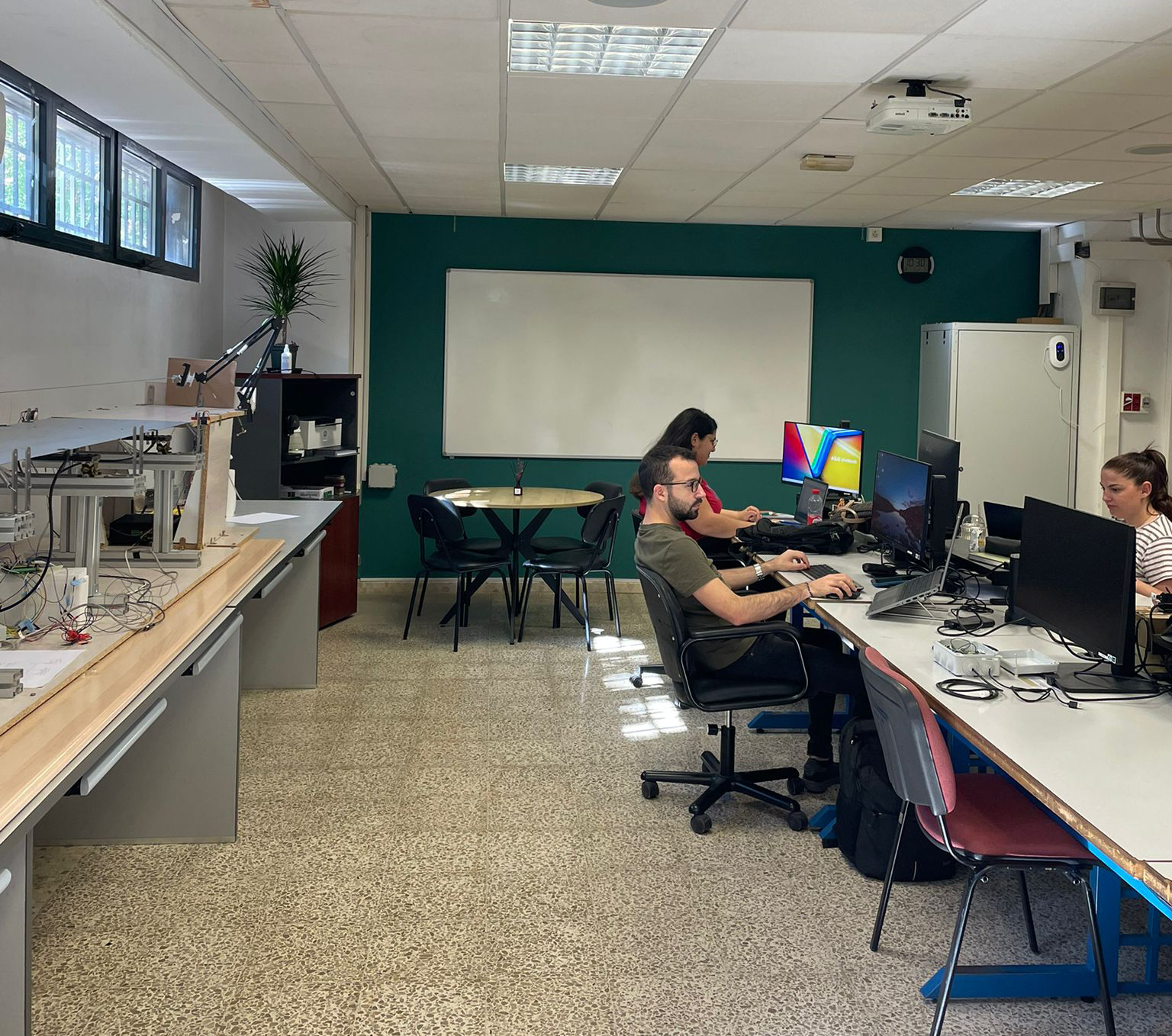
The laboratory also includes a scaled railway bridge benchmark model designed to generate controlled and repeatable datasets under moving-load conditions. The bridge model allows the reproduction of different structural response scenarios and the analysis of healthy and damaged configurations. It is instrumented for structural response measurement, load tracking, vehicle detection, and environmental monitoring. A remotely controlled vehicle is used to simulate train-like moving loads with configurable parameters such as speed, axle configuration, and mass. This setup supports research on vibration-based damage detection, operational modal analysis, sensor networks, and data-driven monitoring methods.
A third experimental setup consists of a steel cantilever beam, fixed at the base and free at the opposite end, used for vibration monitoring and progressive damage studies. The beam is instrumented with accelerometers distributed along its height to measure lateral bending vibrations. Its acquisition system enables synchronized multi-channel measurements with high resolution. The structure can be periodically excited using a small Arduino-controlled actuator, and different damage scenarios can be simulated by modifying the effective mass at the free end. This setup is useful for studying changes in modal properties, testing signal processing methods, and validating dimensionality reduction techniques for structural health monitoring applications.
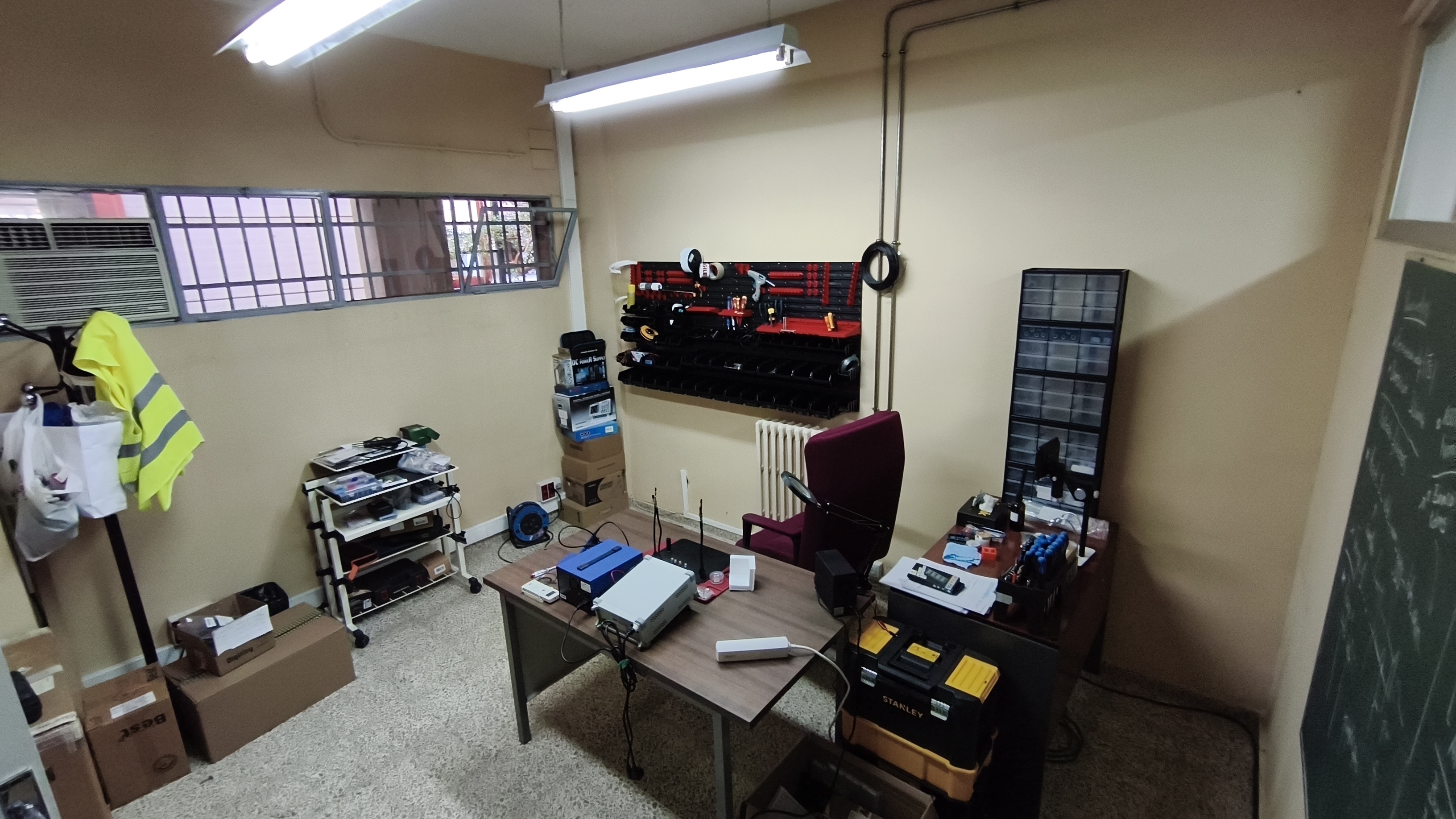
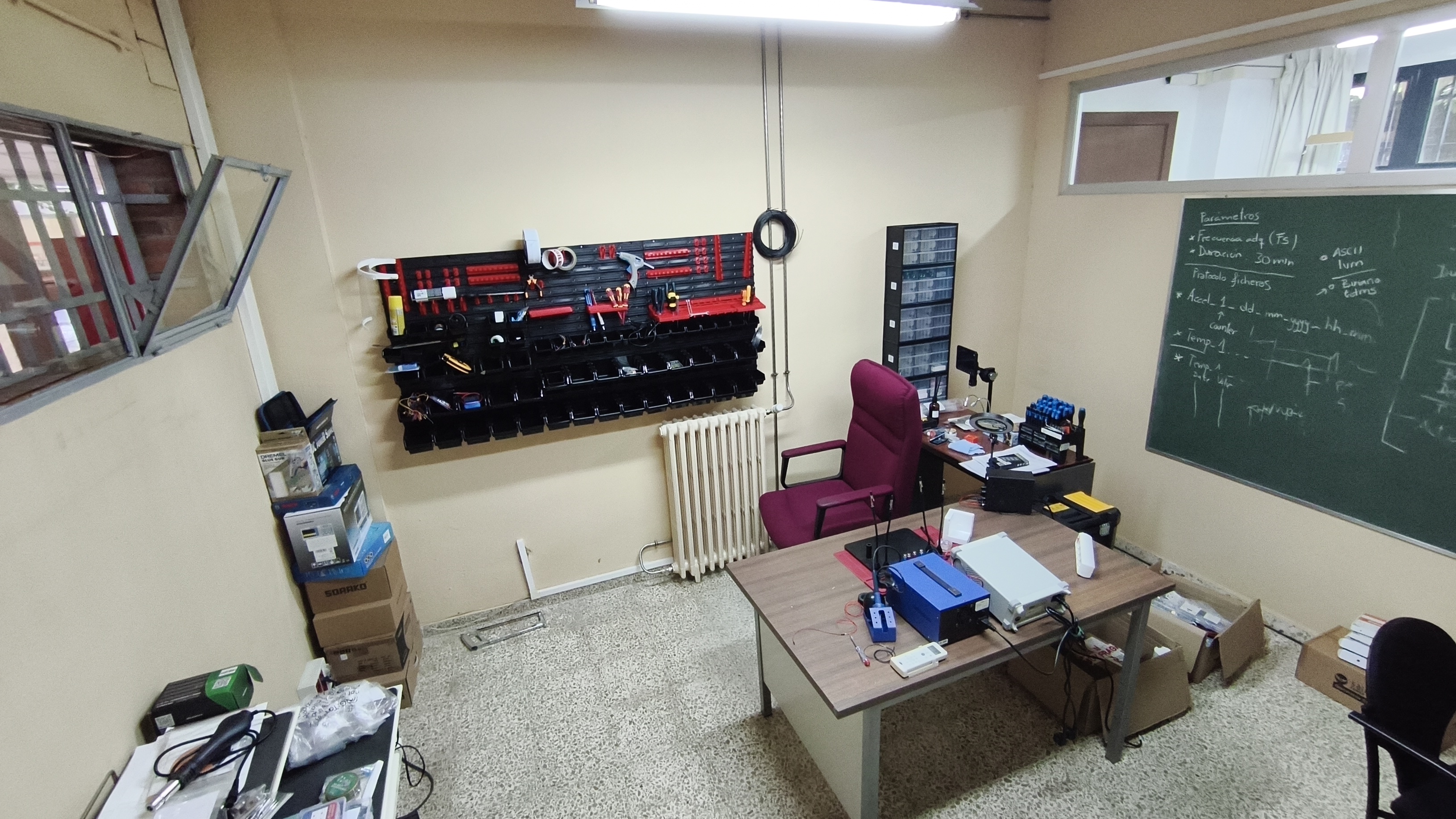
The laboratory includes a small electronics workshop equipped to support prototyping, testing, assembly, and maintenance of electronic systems. The workshop provides basic electronic components such as resistors, capacitors, diodes, transistors, voltage regulators, LEDs, potentiometers, inductors, and MOSFETs, together with a wide range of cables, connectors, terminal blocks, breadboards, PCB prototyping boards, headers, relays, and enclosure accessories.
It also includes tools for soldering, desoldering, PCB handling, wiring, crimping, precision assembly, cleaning, and small mechanical work. For measurement and debugging tasks, the workshop is equipped with instrumentation such as a digital oscilloscope, signal generator, digital multimeter, logic analyzer, and USB voltage/current meter.
In addition, the workshop supports embedded and IoT development through microcontroller and single-board computer platforms, including ESP32, Arduino, Raspberry Pi, LoRa modules, wireless communication modules, sensors, motor drivers, displays, storage modules, and data acquisition boards. Portable power stations, laboratory power supplies, rechargeable batteries, solar panels, and battery chargers are also available for powering and testing experimental setups.
Overall, the electronics workshop provides the necessary resources for developing, assembling, and validating embedded sensing systems, wireless prototypes, and electronic measurement platforms within the laboratory.
 imis.laboratory@gmail.com

