
Quantifying phenotypic plasticity: A call for consistency

Quantifying phenotypic plasticity: A call for consistency

In our 2025 Functional Ecology perspective, we argue that the explosive growth of phenotypic plasticity studies has not been matched by a comparable standardization of how plasticity is quantified. Although we all agree that plasticity is the ability of a genotype to express different phenotypes across environments, we show that researchers still diverge widely in practice, often treating plasticity as a vague property of organisms or species rather than a measurable attribute of specific traits.

Our central proposal is to recover a strictly trait‑ and genotype‑based view of plasticity, operationalized through reaction norms fitted with mixed‑effects models. We distinguish clearly between genotype‑implicit and genotype‑explicit approaches, emphasizing that only designs that track identifiable genotypes (clones, inbred lines, sibships, etc.) can meaningfully address G×E interactions and the evolutionary potential of plasticity. Our survey of recent literature reveals that barely half of the studies published between 2022 and 2024 explicitly control for genotype, which severely limits what we can infer about how plasticity evolves.

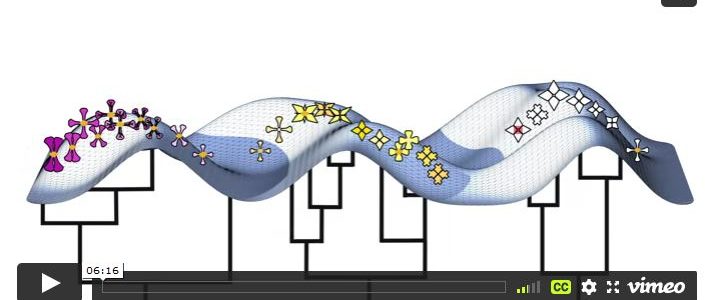
(a)Traditionally, plasticity is assessed using different individual sof the same genotype facing different environments.Thistype of plasticity is common for developmentally plastic traits. The finest level of analysis of plasticity here is the genotype. (b) Plasticity can be expressed when the same individuals face different environments and change the expression of a labile trait (within-individual plasticity). (c) In modular organisms, within-individual plasticity can emerge when different modules confront different environments. In this case, within- individual plasticity can occur not only for labile traits but also for developmentally plastic traits. (d) Plasticity can also occur in modular organisms when the same module faces different environments. Within-module plasticity will affect labile traits. Icons modified from vecta.io.

We also differentiate between environment‑implicit indices, based on qualitative contrasts among treatments, and environment‑explicit estimates, which quantify plasticity as the slope of a reaction norm across measured environmental gradients. Using simple simulations, we show that environment‑explicit metrics are less biased and more sensitive to the magnitude of environmental change than widely used indices such as RDPI. Building on this, we outline a hierarchy of mixed‑model tools to analyse increasingly complex situations: from basic reaction norms to within‑individual and within‑module plasticity, polyphenic traits with sigmoidal responses, and multidimensional plasticity involving multiple environmental drivers.

Rather than presenting this as the only possible route, we advocate this mixed‑model, reaction‑norm framework as a coherent, statistically robust baseline that can help the community compare results across systems. By treating plasticity explicitly as a trait property embedded in G×E structure, we aim to clarify conceptual debates and make empirical estimates of plasticity more interpretable and evolutionarily meaningful.

More information: 
Gómez JM, Perfectti F, González Megías A, Armas C. 2025. Quantifying phenotypic plasticity: A call for consistency Functional Ecology 39: 2974–2984. LINK

El calor, los pigmentos florales y la paradoja de las flores de Moricandia arvensis

El calor, los pigmentos florales y la paradoja de las flores de Moricandia arvensis
Cuando miramos una flor, no vemos la luz que absorbe para sus procesos vitales, sino la que refleja y nos devuelve. En otras palabras: su color es la parte de la luz que le sobra.

Una especie con dos rostros florales

Moricandia arvensis es una planta mediterránea que florece durante buena parte del año. Lo verdaderamente fascinante es que sus flores no son siempre iguales. En primavera, la especie produce flores de color lila, con visibilidad incluso en el rango ultravioleta. Cuando llegan los meses cálidos del verano, esas mismas plantas generan flores blancas, aparentemente más discretas. Este fenómeno constituye un claro ejemplo de plasticidad fenotípica: la capacidad de un mismo organismo para mostrar distintos aspectos de un rasgo en función de las condiciones ambientales.

La hierba perenne Moricandia arvensis experimenta un cambio radical en el color, tamaño y forma de sus flores como resultado de la plasticidad fenotípica. En primavera, esta planta produce flores grandes, cruciformes y lilas que atraen principalmente a abejas grandes de lengua larga. Los cambios de temperatura y fotoperiodo en verano desencadenan modificaciones en la expresión génica y la producción de flores pequeñas, redondeadas y blancas que atraen a abejas pequeñas de lengua corta, mariposas y escarabajos.

Esta plasticidad nos ofrecía una oportunidad de oro: observar cómo varía la composición de pigmentos en los dos tipos de flores de la misma planta, expuestos a condiciones ambientales distintas, y analizar si esos cambios alteran la manera en que los polinizadores perciben las flores.

¿Cómo lo investigamos?

El estudio, que acabamos de publicar en la revista American Journal of Botany, se desarrolló combinando trabajo de campo y laboratorio. En una población natural de Moricandia arvensis, recolectamos flores de primavera y de verano y analizamos su reflectancia espectral: es decir, cómo reflejan la luz en distintos rangos de longitudes de onda, incluida la radiación ultravioleta que muchos insectos pueden ver, pero que resulta invisible a nuestros ojos.

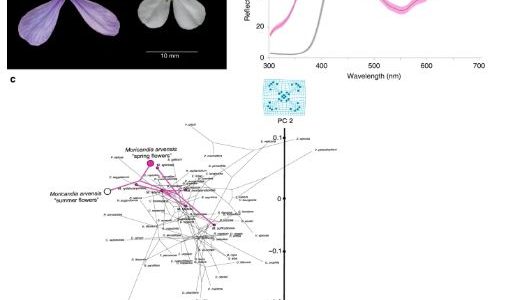
La reflectancia de los pétalos frescos se midió con un espectrofotómetro Flame de Ocean Optics. Las flores lilas (línea rosa) reflejan intensamente en el rango UV, mientras que las flores blancas (línea gris) absorben en esta región. En la zona del verde, las flores lilas muestran una reflectancia baja, en contraste con las blancas. Estas diferencias en los espectros se deben a la acumulación diferencial de pigmentos.
También extraímos los pigmentos presentes en los pétalos con metanol acidificado. Los espectros de absorbancia de los extractos se analizaron en un espectrofotómetro de microplacas. Las flores lilas mostraron un pico de absorbancia en la región del verde que coincide con los pigmentos antociánicos. Tanto las flores lilas como las blancas presentaron picos de absorbancia en la región ultravioleta asociados a flavonoides absorbentes de UV, aunque en las flores blancas la concentración fue mayor.

Después, realizamos un análisis químico detallado de los pigmentos mediante UHPLC-ESI-MS/MS, una técnica de alta resolución que nos permite identificar y cuantificar compuestos fenólicos y flavonoides con gran precisión. Por último, utilizamos modelos de visión basados en los sistemas sensoriales de distintos grupos funcionales de polinizadores (abejas, moscas, mariposas y coleópteros) para predecir cómo perciben estas flores.

Flores blancas, pero no invisibles

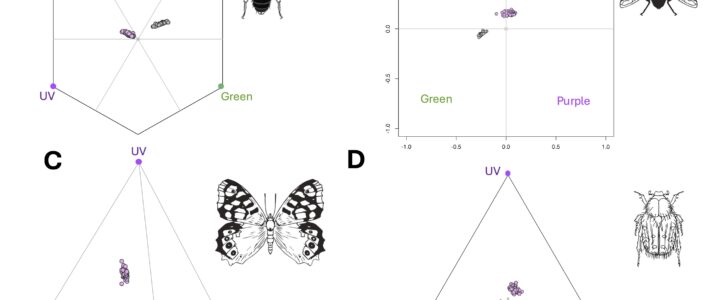
Modelamos los espectros de reflectancia de las flores en los sistemas visuales de abejas, moscas, mariposas y escarabajos. Las flores de primavera y verano (puntos lilas y blancos, respectivamente) ocuparon diferentes posiciones en los modelos de espacio de color de cada grupo funcional de polinizadores. Esto significa que los polinizadores perciben las flores de manera diferente, aunque ambos colores florales se distinguen igualmente bien del fondo.

Más compuestos en verano, más protección

Implicaciones ecológicas y evolutivas

Photosynthesis in Moricandia and related species, a talk by Urte Schlüter

Photosynthesis in Moricandia and related species, a talk by Urte Schlüter

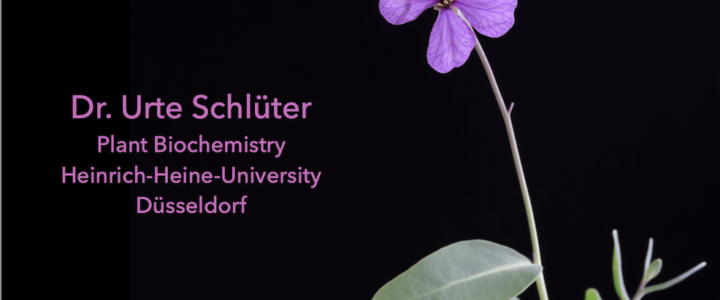
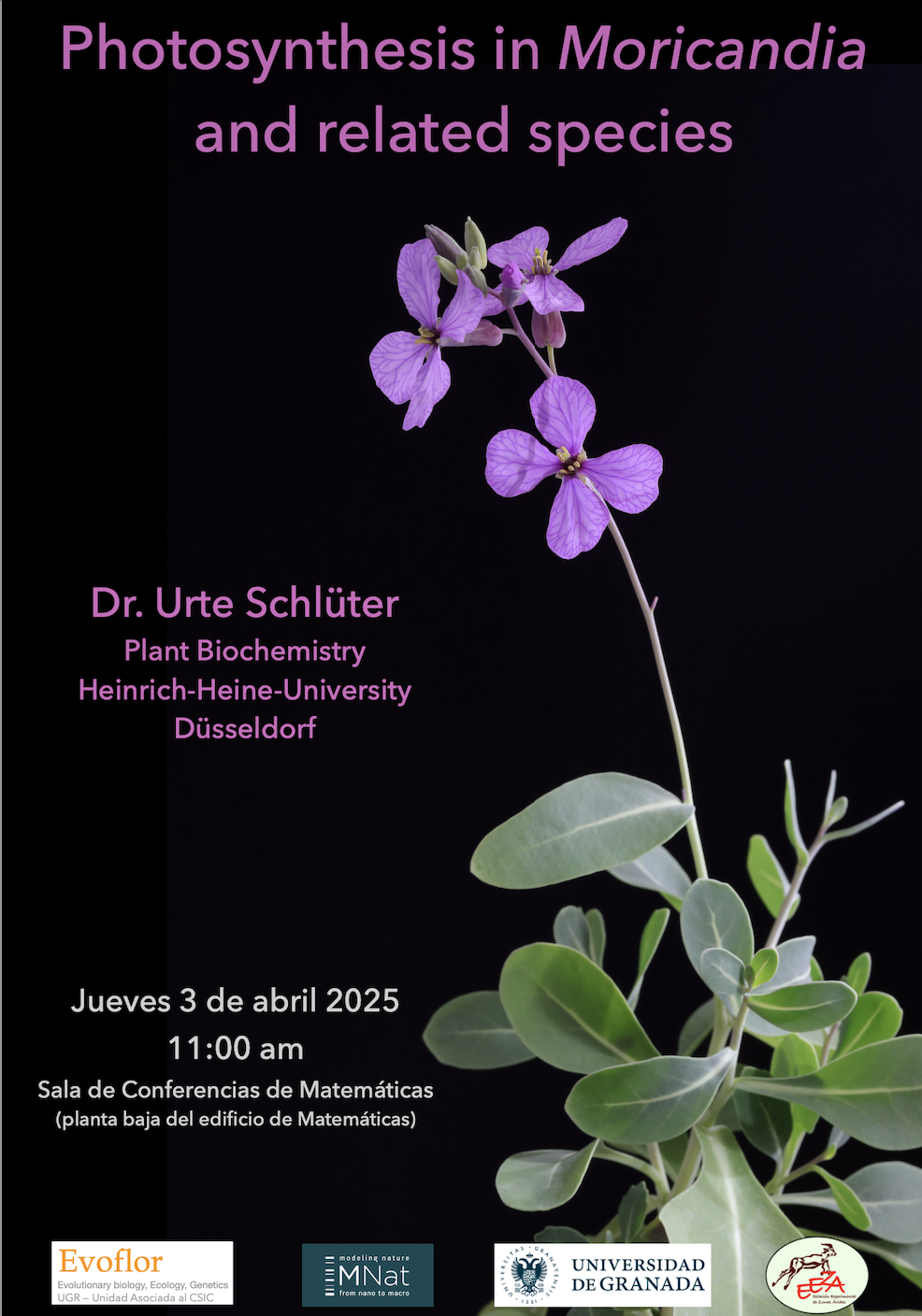
Next Thursday, April 3, at 11 am, in the lecture hall of Mathematics (Faculty of Science), Dr. Urte Schlüter from the Heinrich-Heine-University Düsseldorf will give the following talk:

Photosynthesis in Moricandia and related species.


Species with C4 photosynthesis can reach high efficiencies in the use of light, water and nitrogen. The evolution of C4 photosynthesis is connected with biochemical and anatomical rearrangements of leaves, which probably occurred through intermediate stages. Some species of the plant genus Moricandia (Brassicaceae), which inhabit semi-arid regions, show a photosynthetic mechanism intermediate between C3 and C4 types, which confers advantages in conditions of high temperature and low water availability. These species present foliar traits that oscillate between the typical characteristics of C3 and C4 species.
Dr. Schlüter’s group studies these intermediate C3-C4 photosynthetic forms at the biochemical, anatomical and developmental levels.

More info: https://www.ceplas.eu/en/research/dr-urte-schlueter


New vídeo explaining a paper

New vídeo explaining a paper

Phenotypic plasticity guides Moricandia arvensis divergence and convergence across the Brassicaceae floral morphospace“…
This is the title of our latest paper published in the New Phytologist journal. Do you find it difficult to understand? Watch and listen first to this video that we have prepared to explain this interesting evolutionary process that we have found in our Moricandia arvensis study system.

We are sure that now you will understand our work much better!
If so, spread the word!

New paper on phenotypic plasticity

New paper on phenotypic plasticity

A new paper from our working group has just been published in New Phytologist journal. In this study we examine the role of phenotypic plasticity in the evolutionary processes of convergence and divergence, and we have done this by focusing on the Brassicaceae plant family. For this, in addition to the work we are developing with our Moricandia study system, we have added an enormous revision work on the characterization of floral traits and pollination systems in the Brassicaceae family. Our knowledge of this important plant family is now much better!

The title is “Phenotypic plasticity guides Moricandia arvensis divergence and convergence across the Brassicaceae floral morphospace“.

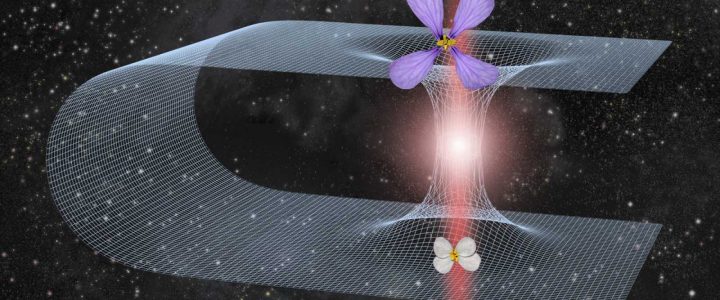
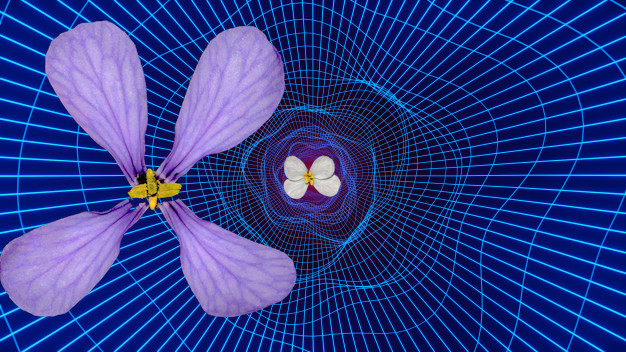
Although our work is not about cosmic wormholes, it is true that something has inspired us…

Volvemos a las reuniones “Face-to-face”…

Volvemos a las reuniones “Face-to-face”…

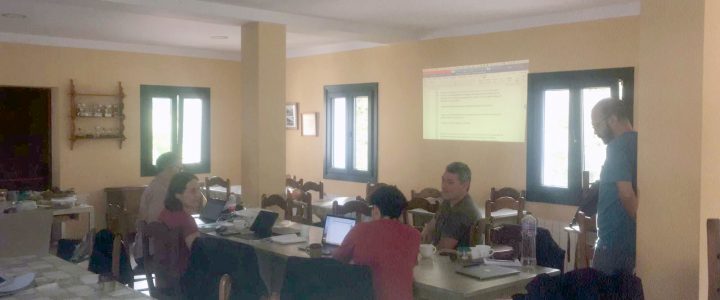
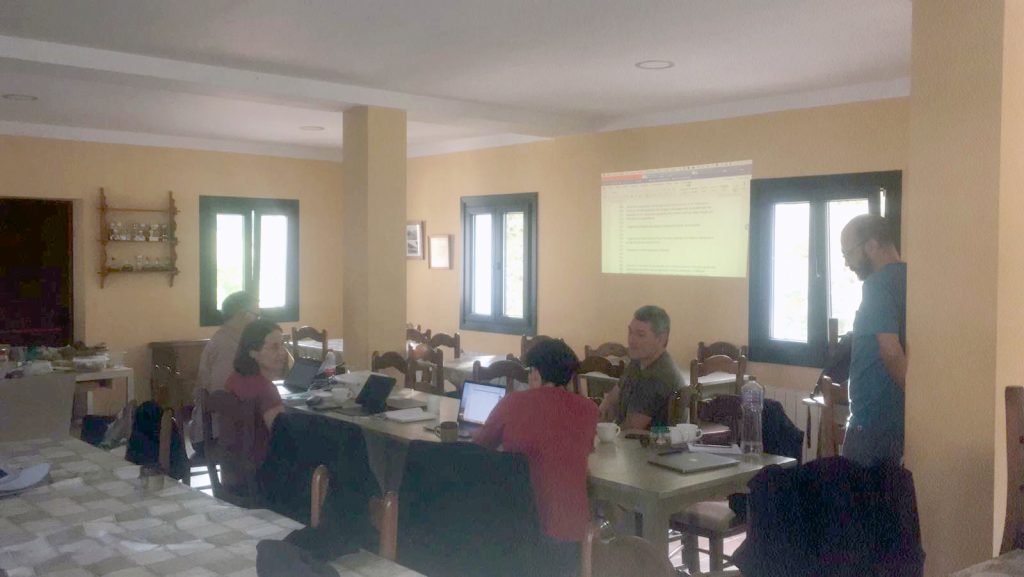
Finalmente hemos podido volver a las reuniones de trabajo personales. Durante dos fines de semana del pasado mes de septiembre los miembros del grupo Evoflor nos hemos podido reunir en el incomparable marco del
Parque Nacional de la Sierra de las Nieves (Málaga) para mantener sendas reuniones de coordinación. Este precioso entorno natural, unido a las ganas que teníamos de volver a vernos las caras, ha favorecido las discusiones y debates intensos, producto de las cuales hemos sido capaces de sentar las bases de la que será nuestra propuesta de proyecto en la siguiente convocatoria del Plan Nacional de I+D y hemos esbozado el siguiente manuscrito que enviaremos a publicar lo antes posible.

Se echaban de menos las reuniones “físicas” para poder recuperar las sesiones maratonianas de discusiones de trabajo sin las distracciones del “modo virtual”.

La verdad es que… es mucho más agradable y productivo volver al trabajo viéndonos las caras “en real”. A ver si esta “pesadilla” pandémica se termina y podemos volver a las rutinas en las que nos desenvolvemos más eficientemente.

Si quieres saber un poco más sobre plasticidad fenotípica y polinización, este vídeo te interesa…

Si quieres saber un poco más sobre plasticidad fenotípica y polinización, este vídeo te interesa…

Si quieres saber un poco más sobre plasticidad fenotípica y polinización, este vídeo te interesa…

Cuando en el año 2008 comenzamos a elaborar vídeos de animación para transferir al conjunto de la sociedad la información publicada en los artículos científicos que escribíamos, uno de los objetivos era trasladar esta información de manera rápida y comprensible a un público no familiarizado con nuestro trabajo de investigación. La realidad nos ha puesto en nuestro sitio y … resulta que no somos capaces de hacer el trabajo de divulgación científica en paralelo al de investigación. Han tenido que pasar unos meses desde la publicación de nuestro estudio sobre plasticidad fenotípica y nicho de polinizadores*, pero… ahora, por fin, podemos mostraros el vídeo que hemos preparado para tratar de incrementar la difusión social de este estudio. Poned pantalla grande, dadle volumen y … disfrutadlo cómo lo hemos hecho los autores con el trabajo realizado.

En este vídeo mostramos qué es la plasticidad fenotípica y cómo la plasticidad individual dentro de las flores de Moricandia arvensis (Brassicaceae) permite a esta especie de planta modificar su nicho de polinización.

*Este vídeo muestra los resultados del estudio:
Gómez JM, Perfectti F, Armas C, Narbona E, González-Megías A, Navarro L, DeSoto L, Torices R (2020). Within-individual phenotypic plasticity in flowers fosters pollination niche shift. Nature Communications 11: 4019 https://doi.org/10.1038/s41467-020-17875-1

Si estás interesado en leerlo, no dudes en solicitárnoslo

Phenotypic plasticity, climate change and pollinators

Phenotypic plasticity, climate change and pollinators

Phenotypic plasticity, climate change and pollinators

A drastic change in floral phenotype causes the same plants to attract different pollinators and reproduce in harsh climates

Phenotypic plasticity is the ability of a genotype to produce different phenotypes in response to changes in the environment. This is an essential property of living beings but its role in adaptation and acclimatization to environmental changes is not yet fully known.

A Moricandia arvensis plant with its «typical» spring flower phenotype (Photo by F. Perfectti).

As part of a truly multidisciplinary team of researchers from the Experimental Station of Arid Zones (CSIC) and the Universities of Granada, Vigo, Pablo Olavide and Rey Juan Carlos, we have just published an article in the top-ranking journal Nature Communications demonstrating experimentally, both in natural conditions and in the laboratory, the phenotypic plasticity of the flowers of a plant species living in semi-arid environments.

A comparison of the different flower phenotypes this plant produces in spring (left) or harsh summer (right) conditions (Photo by F. Perfectti).

In spring, this species – the crucifer Moricandia arvensis – produces large, lilac-colored, UV-reflecting flowers in the shape of a cross. These flowers attract mainly large, long-tongued bees as pollinators. However, unlike most coexisting species, M. arvensis maintains flowering during the dry, hot summer of the western Mediterranean. This is due to its plasticity in key vegetative traits, including photosynthetic traits, that adjust its metabolism to these extreme temperatures and water deficit conditions. The summer’s high temperatures and longer light hours trigger changes in the expression of more than 625 genes in the flower that lead to these plants to produce different radical flowers. Whereas in spring flowers were large and cross-shaped, in summer they are small and rounded; whereas they were lilac and reflected UV, in summer they are white and absorb UV. These summer flowers attract a different set of pollinators composed of more generalist species. This change in the pollinator set (the pollination niche) allows this plant to reproduce successfully under the challenging summer conditions. Phenotypic plasticity for flower, vegetative, and photosynthetic traits seems to allow M. arvensis to cope with anthropogenic disturbances and climate change.

The phenotypic plasticity exhibited by individuals of the Moricandia arvensis plant promotes the production of large, lilac-colored, cross-shaped flowers that reflect UV and attract mainly large long-tongued bees in spring and smaller, rounded white flowers, which absorb UV, in summer, when environmental conditions are difficult for many organisms to survive. These «summer» flowers are visited by generalist pollinators and this allows the plant to continue to reproduce when environmental conditions are harsh.

Gómez JM, Perfectti F, Armas C, Narbona E, González-Megías A, Navarro L, DeSoto L, Torices R (2020). Within-individual phenotypic plasticity in flowers fosters pollination niche shift. Nature Communications 11:4019 https://doi.org/10.1038/s41467-020-17875-1

Anther rubbing en Canal Sur

Anther rubbing en Canal Sur

Nuestra investigación sobre el movimiento de los estambres en Erysimum incanum, publicada en la revista The American Naturalist, está teniendo gran repercusión en los medios. De hecho está clasificado como en el 5% superior de todas las investigaciones analizadas por Altmetric.

Abdelaziz M, Bakkali M, Gómez JM, Olivieri E, Perfectti F.
Anther rubbing, a new mechanism that actively promotes selfing in plants.
The American Naturalist 193: 140 – 147
DOI    

El programa ConCiencia de Canal Sur también se ha interesado y ha realizado un reportaje sobre nuestro trabajo. Pulse sobre la imagen para visualizarlo:

El clip de video también se puede ver en este enlace.

Además, periódicos como El País, Ideal, La Vanguardia, El Confidencial, 20 minutos y un largo etcétera se han hecho eco de esta publicación, así como revistas científicas de la importancia de Science.